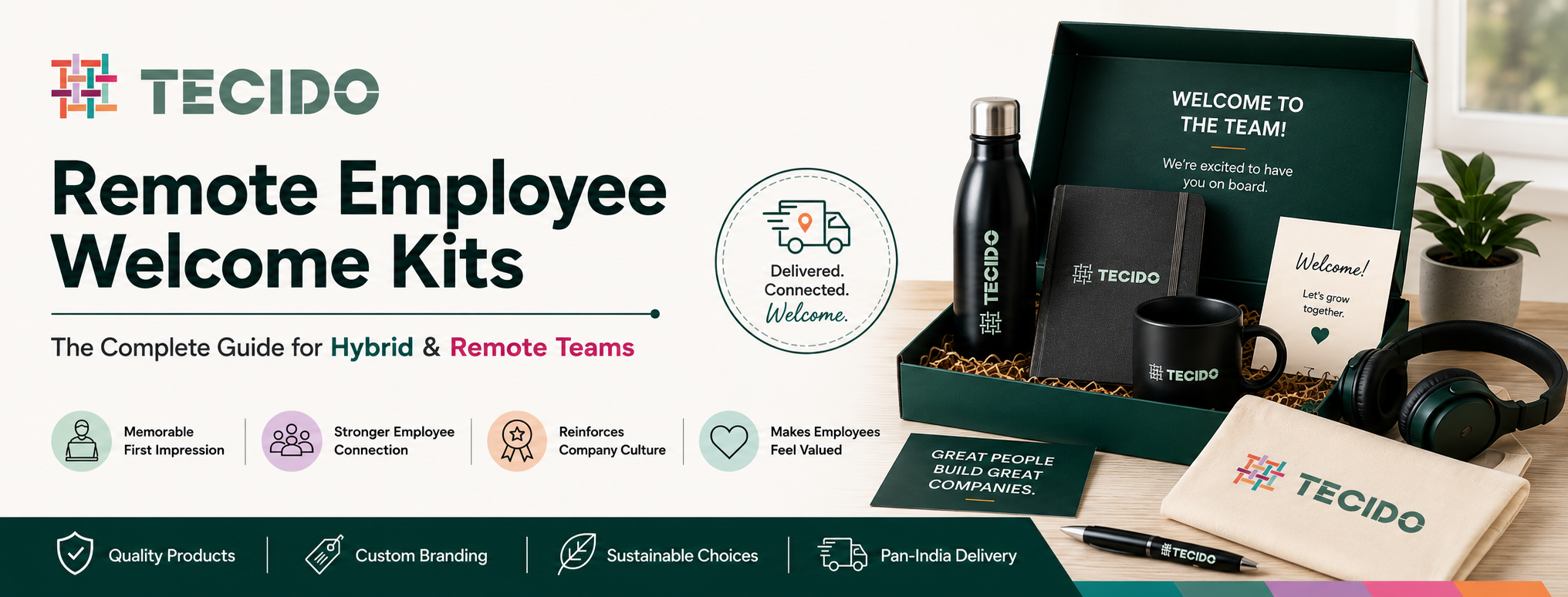
Remote Employee Welcome Kits: The Complete Guide
Discover how to create memorable remote employee welcome kits that improve onboarding, engagement, and employer branding. Learn what to include, best practices, and common mistakes.
Quick Summary
As remote and hybrid work become the norm, companies need new ways to make employees feel connected from day one. A thoughtfully curated remote employee welcome kit bridges the physical distance by delivering a memorable onboarding experience right to the employee's doorstep.
This guide explores what to include, how to personalize kits, logistics to consider, and best practices for creating welcome kits that strengthen engagement and company culture.
Introduction
The workplace has changed dramatically over the last few years. Employees no longer need to walk into a corporate office on their first day—they may be joining from another city, another state, or even another country.
While technology enables remote work, it cannot replace the excitement of receiving a thoughtfully designed welcome kit. For many remote employees, the welcome kit becomes their first tangible interaction with the company.
A well-designed remote onboarding kit helps employees feel valued, reduces first-day anxiety, and creates an immediate emotional connection with the organisation.
Why Remote Welcome Kits Matter
Remote employees often miss out on the informal office interactions that naturally build relationships and culture.
A welcome kit helps bridge this gap by:
- Creating a memorable first impression
- Reinforcing company culture
- Making employees feel included
- Building excitement before Day One
- Strengthening employer branding
- Encouraging social sharing on LinkedIn and internal communication platforms
A simple package delivered to the employee's home can significantly improve their onboarding experience.
What Should a Remote Employee Welcome Kit Include?
The best welcome kits combine practicality with thoughtful branding.
Essential Office Accessories
- Premium notebook
- Branded pen
- Insulated water bottle
- Coffee mug
- Mouse pad
- Laptop sleeve
- Desk organiser
These are everyday essentials that employees will continue using long after onboarding.
Technology Accessories
For remote employees, technology plays a crucial role.
Useful additions include:
- Wireless mouse
- Webcam cover
- USB hub
- Laptop stand
- Wireless charger
- Cable organiser
- Bluetooth speaker
- Earphones
Choose accessories based on employee roles and work requirements.
Company Branded Merchandise
Branded merchandise strengthens belonging without feeling promotional.
Popular options include:
- T-shirts
- Hoodies
- Tote bags
- Caps
- Backpacks
- Diaries
Employees often appreciate subtle, premium branding over oversized logos.
Welcome Essentials
Every welcome kit should include:
- Welcome letter from the leadership team
- Employee handbook (digital or printed)
- Company values card
- Team introduction
- Joining checklist
- HR contact details
These documents make employees feel supported from the very beginning.
Personalisation Makes the Difference
One of the simplest ways to elevate a welcome kit is through personalisation.
Consider including:
- Employee's name on the welcome card
- Handwritten message from the reporting manager
- Department-specific notebook
- Birthday or joining month mention
- Local treats based on the employee's city
These thoughtful touches create a lasting emotional impact without significantly increasing costs.
Logistics: The Most Overlooked Element
Designing the kit is only half the job. Delivering it efficiently is equally important.
Keep these points in mind:
- Verify employee addresses in advance.
- Plan dispatch timelines before the joining date.
- Use reliable courier partners.
- Track deliveries proactively.
- Ensure secure packaging for fragile items.
- Include a digital QR code linking to onboarding resources.
A delayed or damaged welcome kit can negatively affect the employee's first impression.
Best Practices for Remote Welcome Kits
1. Deliver Before Day One
Whenever possible, ensure the welcome kit reaches the employee one or two days before their joining date. This builds excitement and allows them to use the items during onboarding sessions.
2. Keep Utility First
Avoid filling the box with unnecessary promotional products.
Choose practical items employees will genuinely use every day.
3. Reflect Your Brand
Colours, typography, packaging, and messaging should align with your brand identity while remaining elegant and professional.
4. Think Sustainably
Use recyclable packaging, reusable products, and eco-friendly materials wherever possible.
Sustainability is increasingly valued by employees and reflects positively on the organisation.
5. Create an Unboxing Experience
Presentation matters.
Premium packaging, neatly arranged products, tissue wrapping, and thoughtful inserts make employees feel genuinely welcomed.
Many organisations even encourage employees to share their unboxing experience on LinkedIn or internal social platforms.
Common Mistakes to Avoid
Avoid these common pitfalls when designing remote employee welcome kits:
- Sending generic, one-size-fits-all kits
- Ignoring shipping timelines
- Overloading the kit with promotional merchandise
- Using poor-quality products
- Forgetting personalised communication
- Choosing impractical items that employees rarely use
Remember, the objective is not to send the largest box but to create the best experience.
Expert Insight
"Remote onboarding is no longer just about delivering products—it's about delivering belonging. Every welcome kit should make employees feel connected to the organisation before they even log in on their first day."
— Vignesh Sanil, Manager – Business Development, Tecido Global
Frequently Asked Questions
What is a remote employee welcome kit?
A remote employee welcome kit is a curated package of branded products, office essentials, onboarding materials, and personalised items delivered to employees working remotely or in hybrid roles.
When should the welcome kit be delivered?
Ideally, the kit should arrive one or two days before the employee's first working day.
How much should companies spend?
Most organisations allocate between ₹1,000 and ₹3,000 for remote onboarding kits, depending on employee roles and company policies.
Should technology accessories be included?
Yes, particularly for remote employees. Accessories like wireless mice, laptop stands, USB hubs, and chargers improve productivity and demonstrate thoughtful planning.
Conclusion
A remote employee welcome kit is far more than a box of branded merchandise—it is the first physical representation of your organisation's culture, values, and commitment to employee experience.
As remote and hybrid work continue to grow, companies that invest in thoughtful onboarding will build stronger engagement, higher employee satisfaction, and a more connected workforce. By combining practical products, personalised messaging, premium packaging, and seamless logistics, you can create a welcome experience that employees remember long after their first day.
About Tecido Global
At Tecido Global, we help organisations design premium remote employee welcome kits that combine functionality, thoughtful branding, and seamless nationwide delivery. From customised merchandise and sustainable packaging to end-to-end fulfilment, we create onboarding experiences that strengthen employer branding and leave a lasting first impression.
Ready to Welcome Employees—Wherever They Are?
Whether your new hires are joining from the office, home, or across the globe, Tecido Global can help you create customised remote welcome kits that reflect your brand and make every employee feel valued from day one.
Get in touch with Tecido Global to design remote employee welcome kits that deliver connection, culture, and impact.
Tecido Global
Your trusted partner for corporate gifting and branded merchandise. We are a team of passionate, creative individuals helping brands build stronger identities through thoughtful, high-quality merchandise that leaves a lasting impression. From concept to doorstep — end-to-end, on time, every single time.
Contact Info
- info@tecidoglobal.com
- (+91) 98924 67276
- (+91) 93213 02123
-
VERDE TECIDO GLOBAL LLP
20th Floor, Commerz II, Oberoi Garden City,
Off Western Express Highway, Goregaon (E),
Mumbai - 400063
GST: 27AAZFV9492L1ZP
MSME Reg.: UDYAM-MH-33-0649603


© 2026 Tecido Global | All Rights Reserved