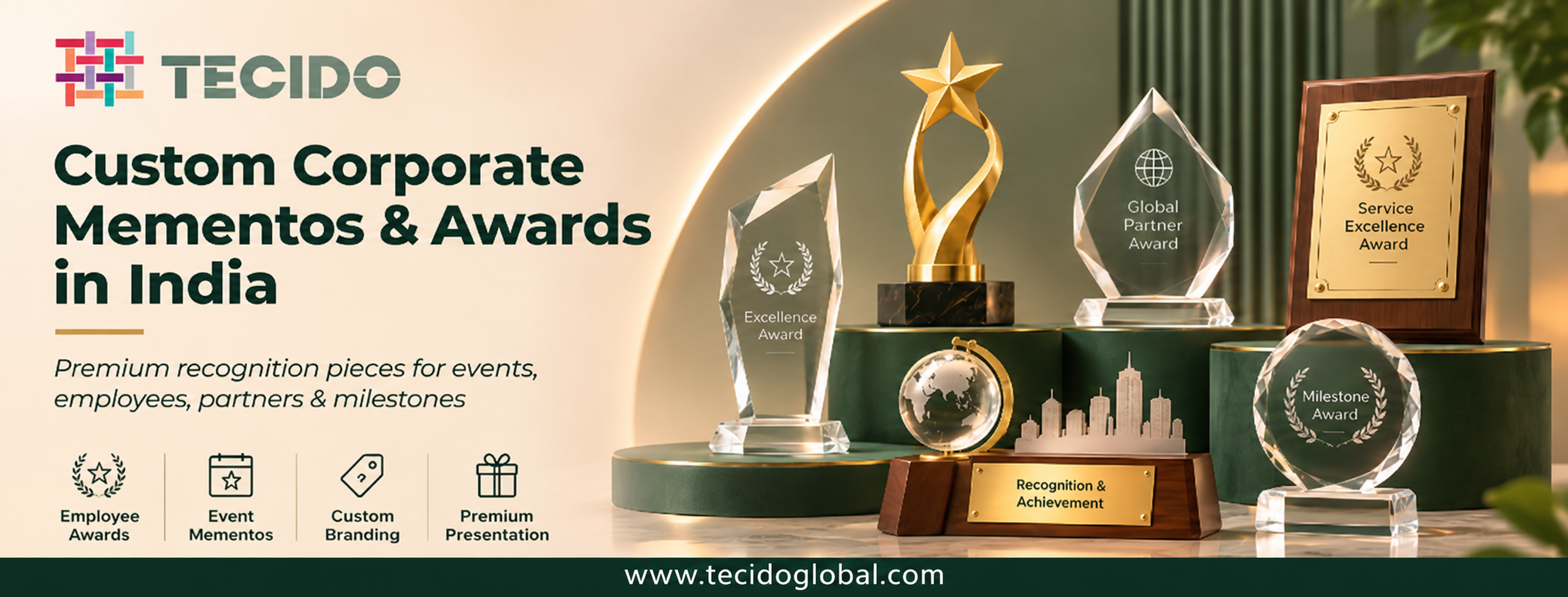
Custom Corporate Mementos & Awards: Materials, Design, Branding & Packaging Guide
A complete guide to custom corporate mementos and awards in India covering materials, design, personalisation, prototyping, production and packaging.
Quick Answer
A strong corporate memento should communicate the achievement before the recipient reads the inscription. Start with the occasion and display context, choose materials that suit the design, keep text legible, prototype the physical piece and test packaging before bulk production. Personalisation data should be locked before engraving or printing begins.
Introduction
Awards and mementos are among the few corporate gifts intentionally designed to be kept and displayed. That makes proportion, material finish, typography and inscription quality critical. A poorly balanced or difficult-to-read award can weaken an important recognition moment.
Start with the recognition story
Define what is being celebrated: service, sales performance, partnership, innovation, event participation, leadership or a project milestone. The design should visually support that story.
Avoid beginning with a generic trophy shape and adding text later.
Material options
Wood and MDF can create warm, structured forms; acrylic supports colour and transparency; metal adds weight and premium feel; glass or crystal can create formal presentation; mixed-material designs can create more distinctive silhouettes.
Material choice should consider fragility, engraving method, weight, cost and shipping.
Design and proportions
Keep the hierarchy clear: award title, recipient name, achievement, company or event and date. Ensure the piece is stable on a desk or shelf and that decorative elements do not obscure the message.
For sculptural mementos, build a mock-up to check scale.
Branding and personalisation
Laser engraving, UV printing, metal plates, screen print and etched finishes can be used depending on material. Personalisation may include names, company names, award categories, years or serial numbers.
Use a locked spreadsheet and proofing workflow for variable data.
Prototype before production
A rendered visual cannot fully show weight, edge finish, glue marks, balance or how the text reads under real light. Produce one physical sample for important programmes.
Check how the memento fits the box and whether decorative elements can move or break in transit.
Packaging and presentation
Foam, die-cut inserts, velvet-look interiors, rigid boxes and protective outer cartons can be selected according to weight and fragility. The recipient should be able to remove and replace the award easily.
For stage presentations, test opening speed and orientation before the event.
Tecido Global Expert View
A memento should represent an achievement, not merely display a logo. At Tecido Global, we approach awards by first understanding what is being recognised—long service, leadership, sales performance, partnership, event participation or a major milestone. Material, shape, weight, inscription and packaging should all support that meaning. Acrylic, metal, wood, glass and mixed-material designs each create a different impression. The most effective mementos are distinctive enough to keep, yet restrained enough to look appropriate in an office or home for years.
Frequently Asked Questions
What materials are used for corporate mementos?
Common materials include wood, MDF, acrylic, metal, glass, crystal and mixed-material combinations.
Can every memento be personalised?
Many can, using engraving, printing, plates or variable text. Feasibility depends on material, design and quantity.
Why is a prototype important?
It reveals scale, balance, finishing, text legibility, assembly and packaging issues that may not be visible in a digital render.
How should corporate awards be packed?
Use a fitted insert and protective box appropriate to the weight and fragility, plus an outer shipper for courier delivery.
Conclusion
A corporate award is a physical record of recognition. Design it around the achievement, prototype it in real materials and give personalisation and packaging the same attention as the object itself.
Tecido Global
Your trusted partner for corporate gifting and branded merchandise. We are a team of passionate, creative individuals helping brands build stronger identities through thoughtful, high-quality merchandise that leaves a lasting impression. From concept to doorstep — end-to-end, on time, every single time.
Contact Info
- info@tecidoglobal.com
- (+91) 98924 67276
- (+91) 93213 02123
-
VERDE TECIDO GLOBAL LLP
20th Floor, Commerz II, Oberoi Garden City,
Off Western Express Highway, Goregaon (E),
Mumbai - 400063
GST: 27AAZFV9492L1ZP
MSME Reg.: UDYAM-MH-33-0649603


© 2026 Tecido Global | All Rights Reserved