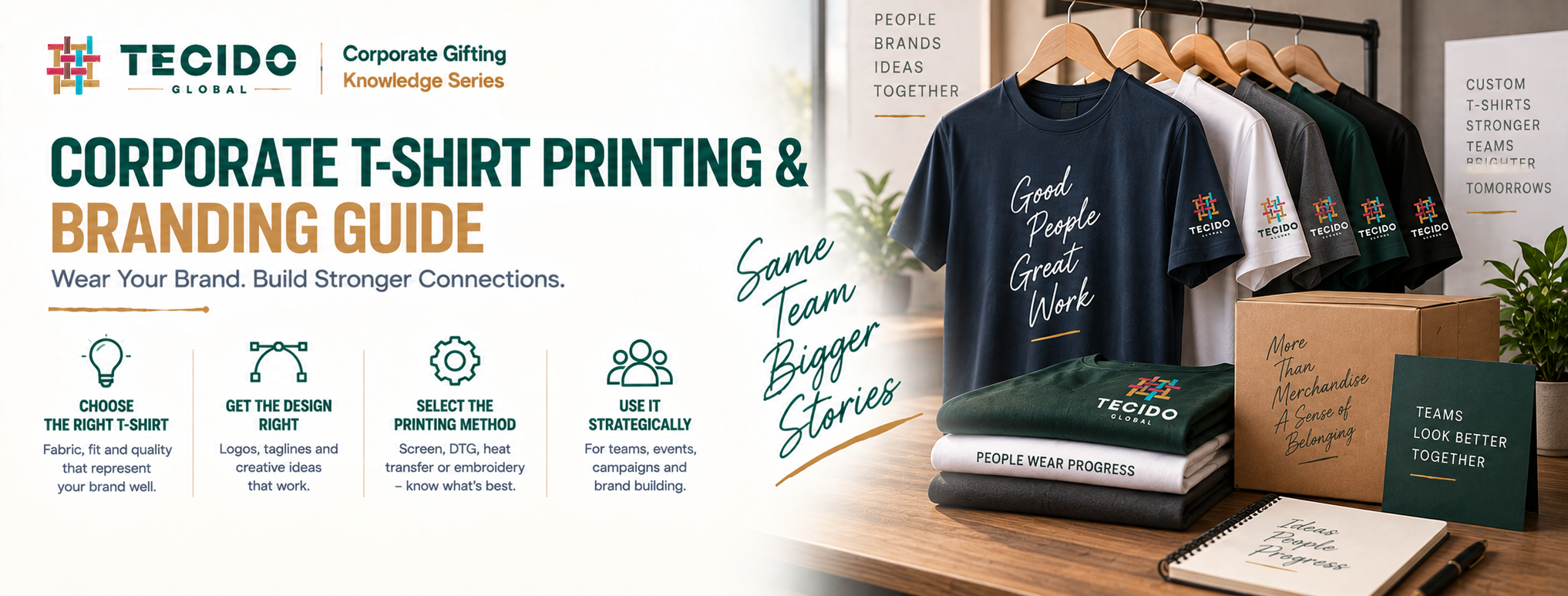
Corporate T-Shirt Printing & Branding Guide: DTF vs Screen Printing vs Embroidery vs Sublimation
Compare DTF, screen printing, embroidery and sublimation for corporate T-shirts in India, including best uses, limitations, artwork, fabric and quantity.
Quick Answer
There is no single best T-shirt branding method. Screen printing is efficient for larger runs and simple designs; DTF handles detailed multi-colour artwork and smaller quantities well; embroidery creates a premium textured finish for logos; sublimation is ideal for polyester-based all-over or sports-style graphics. Choose the method based on fabric, design, quantity, placement, finish and budget.
Introduction
Corporate T-Shirt Printing & Branding Guide: DTF vs Screen Printing vs Embroidery vs Sublimation is designed for Indian HR, Admin, Procurement, Marketing and business teams that need practical guidance rather than a generic product list. The strongest gifting programmes connect the recipient, occasion, budget, branding and delivery model before product selection begins.
Start with the T-shirt, not the printing machine
Fabric composition, GSM, colour, fit and intended use determine which branding method will perform well. A sports event T-shirt, premium employee polo and one-day conference tee should not automatically use the same material or process.
Before production, approve a physical garment or at least a confirmed fabric specification and size chart.
Screen printing: best for scale and strong flat colour
Screen printing applies ink through prepared screens. It is well suited to larger quantities, bold logos and limited colour counts.
Setup makes it less efficient for very small runs or artwork with many colours. Fine gradients and frequent design changes can also increase complexity.
DTF: flexible for detailed multi-colour artwork
Direct-to-film transfers can reproduce detailed artwork and multiple colours on many garment types. It is useful for smaller batches, variable designs and complex logos.
The transfer has a distinct hand-feel, so placement size matters. Large solid areas may feel heavier than a small chest logo.
Embroidery: premium and durable for the right garment
Embroidery uses thread to create a raised, tactile logo. It works particularly well on polos, jackets, caps and heavier fabrics.
Very fine text, large filled areas and highly detailed gradients may not translate cleanly. The artwork often needs digitisation and simplification.
Sublimation: ideal for polyester and all-over design
Sublimation dyes the design into suitable polyester fabric rather than placing a layer on top. It is excellent for sportswear, event jerseys and full-colour all-over graphics.
It generally works best on light-coloured polyester and is not the default choice for cotton corporate tees.
How to choose the right method
Use quantity, fabric, logo complexity, colour count, print size, durability expectation and budget as the decision criteria. Ask for a sample or strike-off when the order is important.
For premium corporate wear, a small embroidered or clean printed logo often looks better than filling every available surface.
Artwork and production checklist
Provide vector logo files where possible, approved brand colours, exact placement size and garment size breakdown. Confirm whether artwork is measured by width or height.
Approve the first piece before bulk production and check print alignment, colour, garment defects and size labelling.
Tecido Global Expert View
A corporate gift should be selected as part of an experience: who receives it, why they receive it, how it is branded, how it is presented and whether it reaches them at the right time. Product choice matters, but execution determines the final impression.
Frequently Asked Questions
Is DTF better than screen printing for corporate T-shirts?
Neither is universally better. DTF is flexible for detailed multi-colour designs and smaller runs; screen printing is strong for larger quantities and simpler artwork.
Is embroidery suitable for T-shirts?
Yes for appropriate fabrics and smaller logo areas, but it can feel heavy on very lightweight tees. It is especially effective on polos and heavier garments.
When should sublimation be used?
Sublimation is ideal for polyester-based sportswear and full-colour or all-over designs. It is generally not the first choice for cotton.
Should companies approve a sample before bulk T-shirt production?
Yes, especially for important events or large quantities. Check garment quality, size, logo colour, placement and branding finish.
Conclusion
Choose corporate T-shirt branding by application, not habit. Match the fabric and artwork to the process, approve a representative sample and keep branding proportional to the garment. The result will look more professional and perform better in use.
About Tecido Global
Tecido Global helps companies curate and execute corporate gifting and custom merchandise programmes across employee engagement, onboarding, events, client gifting, leadership gifting and recognition. The approach combines product curation, branding, packaging, quality control and delivery through one coordinated team. For a requirement, share the audience, quantity, budget, branding needs, delivery locations and deadline to receive a focused shortlist.
Tecido Global
Your trusted partner for corporate gifting and branded merchandise. We are a team of passionate, creative individuals helping brands build stronger identities through thoughtful, high-quality merchandise that leaves a lasting impression. From concept to doorstep — end-to-end, on time, every single time.
Contact Info
- info@tecidoglobal.com
- (+91) 98924 67276
- (+91) 93213 02123
-
VERDE TECIDO GLOBAL LLP
20th Floor, Commerz II, Oberoi Garden City,
Off Western Express Highway, Goregaon (E),
Mumbai - 400063
GST: 27AAZFV9492L1ZP
MSME Reg.: UDYAM-MH-33-0649603


© 2026 Tecido Global | All Rights Reserved